The Fitting Room
One piece of leather, one Crown Street hatter: the Australian wardrobe, made to last
R.M.Williams boots, Akubra hats, David Jones’s menswear hall and the Strand Arcade’s designers.
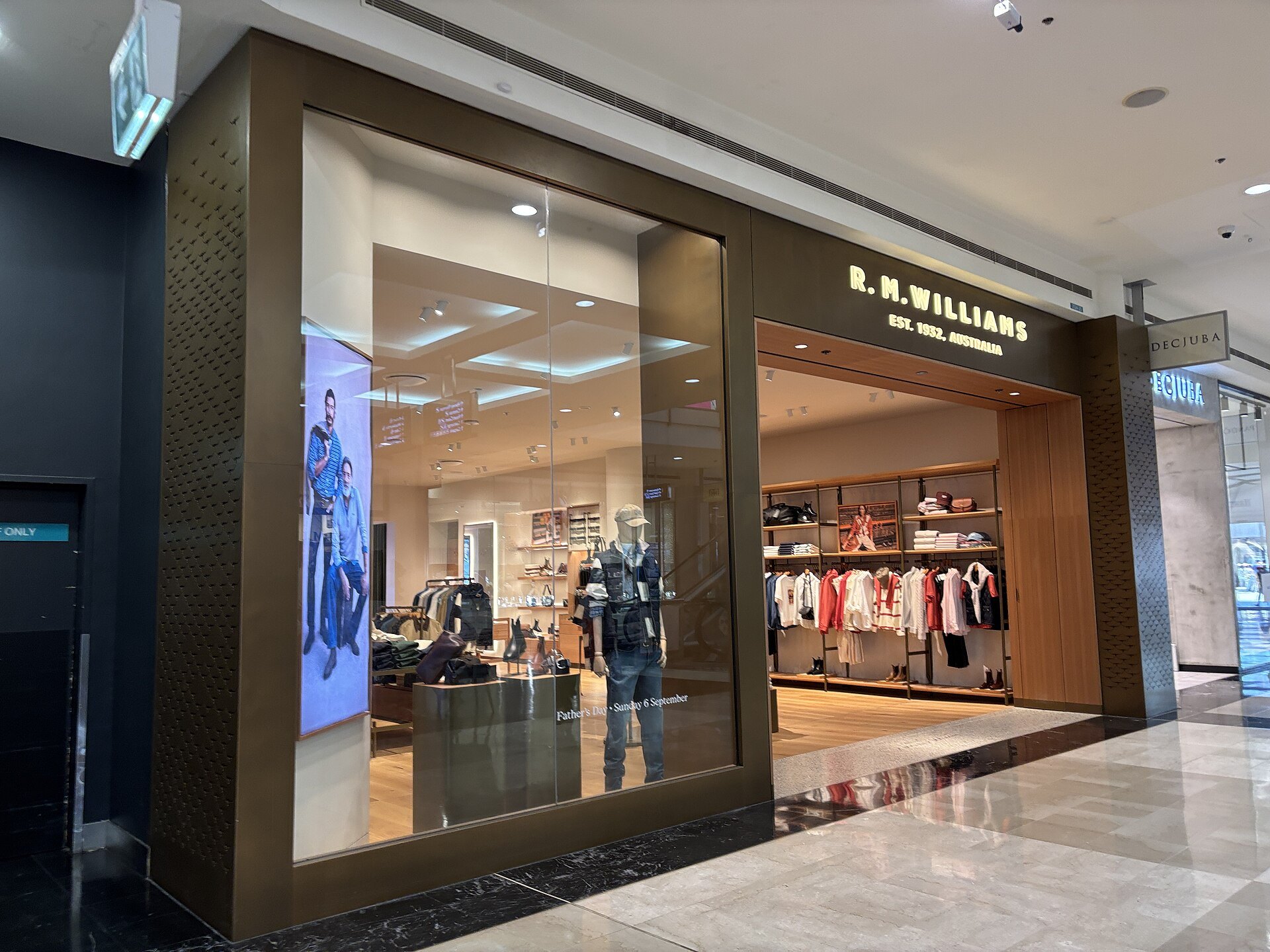
Photo Credit
Image courtesy of © Nick-D · CC BY-SA 4.0 via Wikimedia CommonsWhat does a well-dressed Sydneysider wear when the invitation says smart and the sun is out? Surprisingly often, something first made for the bush: a boot cut from one piece of leather, a felt hat now made in Kempsey. Here are the makers behind the Australian wardrobe and the city halls where you buy it, checked against the makers’ and stores’ own pages in November 2026.
The boot without the seams
R.M.Williams has made boots since 1932. Camping in the Flinders Ranges that year, Reginald Murray ‘RM’ Williams watched stockmen suffer blisters from boot seams and wear out their footwear in hard country, and he believed a single piece of leather could solve both problems at once.
The upper is still cut from one hand-selected hide and shaped into the Chelsea form, with one reinforced seam at the heel, a method the company admits is more complex and labour-intensive than multi-panel construction. With fewer seams, it says, more of the leather’s strength is kept, and the boot moulds to the foot over time and moves as one.
The Craftsman, which the company calls the original, is still its bestselling boot. A boot designed for the stirrup has become the city’s smart shoe, which says something about the length of a Sydney lunch. The brand’s Sydney stores are listed on its own site.
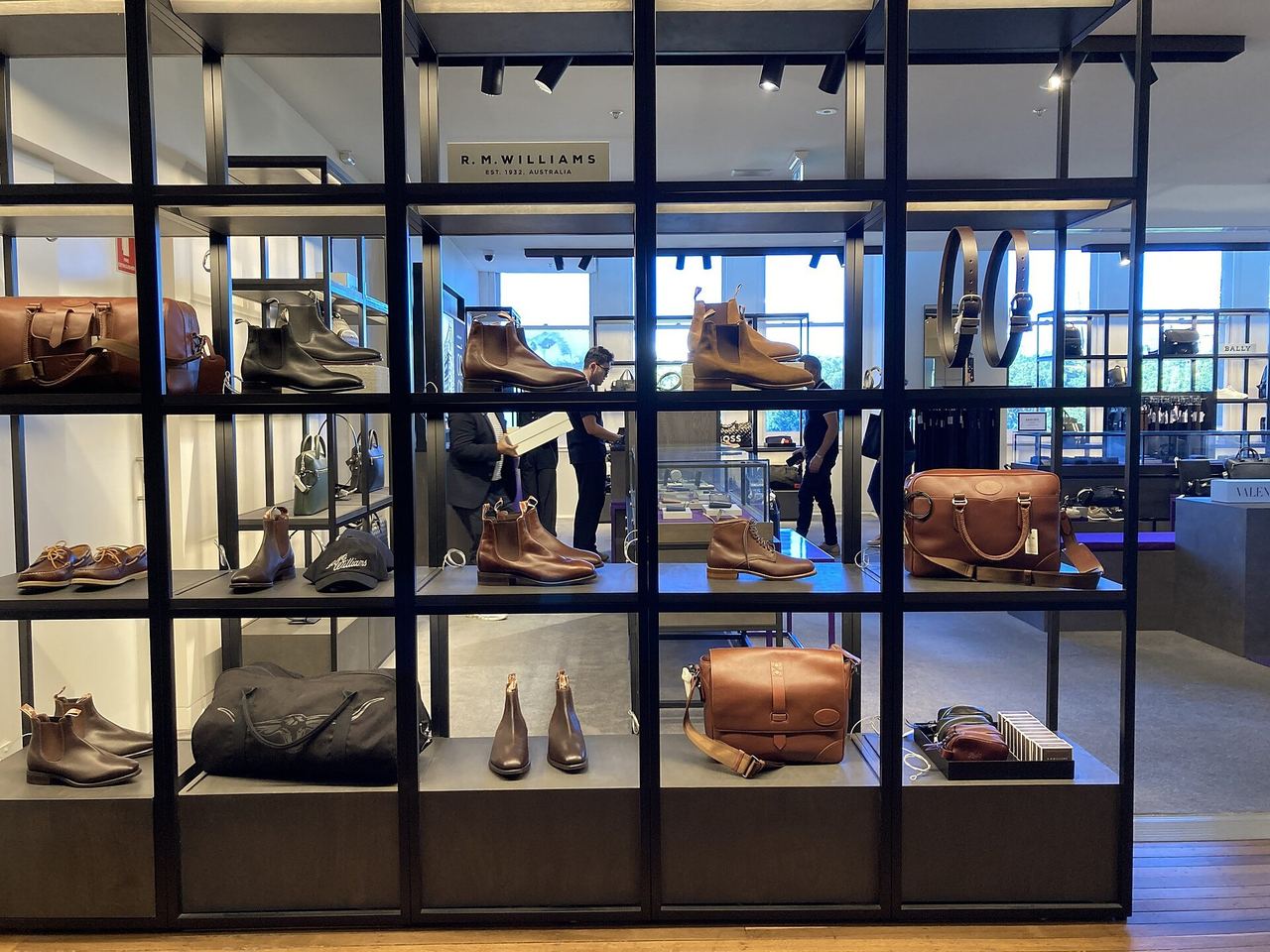
Photo Credit
Image courtesy of © Nick-D · CC BY-SA 4.0 via Wikimedia CommonsA hatter from Crown Street
Akubra began in 1876, when Benjamin Dunkerley established the Kensington Hat Mills near Hobart; in 1892 he invented a fur-dressing machine that the company calls a world first. In 1900 he moved to Sydney and opened a small hat workshop in Crown Street, Surry Hills, now a street better known for its cafés than its felt.
Stephen Keir, a British hatmaker, joined in 1904 and took over as patriarch after Dunkerley’s death in 1918; the business moved to Bourke Street, Waterloo, the following year. The Akubra name was registered in 1912 for a series of Dunkerley hats, and where it came from, the company says, remains a myth to this day. Every great hat deserves a little mystery.
The Strand has hat history of its own: in the early 1900s milliners traded on its ground floor, alongside stamp and book specialists and jewellers.
A boot designed for the stirrup has become the city’s smart shoe, which says something about the length of a Sydney lunch.
Since 1974 the hats have been made in Kempsey, on the mid-north coast of New South Wales, and in 2026 the company marks 150 years; in 2023 a fifth Stephen Keir began his master hatter training. Under an Australian sky the felt hat is less an accessory than a precaution; stockists are listed on Akubra’s own site.
The menswear hall and the arcade
In the city, David Jones has dressed Sydney since a Welsh immigrant opened a store on George Street in 1838, and the firm claims to be the oldest department store in the world still trading under its original name. Its flagship faces Hyde Park from Elizabeth Street, with tailoring rails and suited mannequins on a timber floor, and a menswear hall stacked with shirts and knitwear for those whose working day still begins with a collar.
Across the city blocks, the Strand Arcade, between George Street and Pitt Street Mall, gathers Australian designers on its level one, among them Aje, Bassike, Camilla and Marc, Scanlan Theodore and Dinosaur Designs, whose resin and metal jewellery and homewares have come from the studio Louise Olsen and Stephen Ormandy founded in 1985.
Our advice: try R.M.Williams boots with the socks you mean to wear, and walk the length of the shop before deciding; find an Akubra stockist through the hatter’s own site; and give the Strand Arcade’s level one an unhurried hour on a weekday morning.
Why it's on our list
- The boot without the seams
- A hatter from Crown Street
- The menswear hall and the arcade
Location
The map comes from Google Maps, which sets its own cookies once it loads.
More in depth
 The Fitting RoomHat, flags and a winter swim: what Sydney’s shoreline asks you to wearWinter swimmers since 1929, the red and yellow flags and the five steps for the Australian sun.
 The Fitting RoomThe mall goes to the museum: what Sydney is wearing, and buying, this summerThe Mall at Powerhouse Parramatta, from the arcade to AI, and the Strand’s Australian designers.
 The back storySydney at the table: the harbour, the fire and the fishBennelong, Aria, Oncore and Firedoor: how Sydney eats.