The back story
Market halls, one-piece boots and a hatter in Crown Street: Sydney shopping, the back story
A market hall nearly demolished, an arcade rebuilt after fire and a store opened in 1838.

Photo Credit
Image courtesy of © Chris Olszewski · CC BY-SA 4.0 via Wikimedia CommonsSydney shops in buildings it nearly lost: a market hall that faced demolition in 1959, an arcade left in ruins by fire in 1976, a department store that has traded since 1838. Why has a city so fond of the new kept its Victorian shopping halls, and where does the Australian wardrobe still get made? Here is the back story, from the stores’ own pages and Museums of History NSW, November 2026.
A market hall named for a queen
Shopping on George Street began with produce. The city architect George McRae offered four façade styles, the committee chose Romanesque, and the building opened on 21 July 1898 as the Queen Victoria Markets Building; it has been the Queen Victoria Building since 1918. It was remodelled in the Art Deco style in the 1930s and lost turrets from its minor domes in 1964.
In 1959 there was a proposal to demolish it for a civic square with parking beneath. Instead, restoration began in 1984 and the building reopened in November 1986; a refurbishment finished in 2009 added escalators and lifts. Today the QVB opens until 9pm on Thursdays, and its galleries are worth the visit before the shops are.
Fire in the arcade
A few doors along, the Strand Arcade runs between George Street and Pitt Street Mall. The English architect John Spencer planned it at 340 feet long and three storeys high, with cedar staircases at each end and galleries linked by a central bridge. In the early 1900s milliners, stamp and book specialists and jewellers traded on its ground floor.
At 3am on 25 May 1976 fire broke out; twelve crews fought it for hours, and the building was left in ruins. By 1977 the arcade was ready for a fashion parade, which says a good deal about Sydney’s priorities. Its level one now gathers Australian designers, among them Dinosaur Designs, the resin and metal studio Louise Olsen and Stephen Ormandy founded in 1985.
The store on George Street
On 24 May 1838 David Jones, a Welsh immigrant who had arrived in 1835, opened a store on the corner of George Street and Barrack Lane, according to Museums of History NSW. The firm claims to be the oldest department store in the world still trading under its original name. Its flagship faces Hyde Park from Elizabeth Street, where the menswear hall still believes in a well-cut suit.

Photo Credit
Image courtesy of © Chris Olszewski · CC BY-SA 4.0 via Wikimedia CommonsMade here: boots, hats and resin
Two Australian names began far from George Street and still sell in the city. R.M.Williams dates from 1932, when Reginald Murray Williams, camping in the Flinders Ranges, watched stockmen suffer blisters from boot seams and conceived a riding boot cut from a single piece of leather, with one reinforced seam at the heel. The Craftsman, which the company calls the original, is still its bestselling boot.
By 1977 the arcade was ready for a fashion parade, which says a good deal about Sydney’s priorities.
Akubra began in 1876, when Benjamin Dunkerley established hat mills near Hobart. The Sydney chapter is the surprise: in 1900 he opened a small workshop in Crown Street, Surry Hills, a street now better known for coffee than for felt. The Akubra name was registered in 1912, and the hats have been made in Kempsey, on the mid-north coast of New South Wales, since 1974.
Stephen Keir, a British hatmaker, joined the business in 1904 and became its patriarch after Dunkerley died in 1918; in 2023 a fifth Stephen Keir began his master hatter training. Few Sydney families can trace a trade so far, and fewer still can wear it.
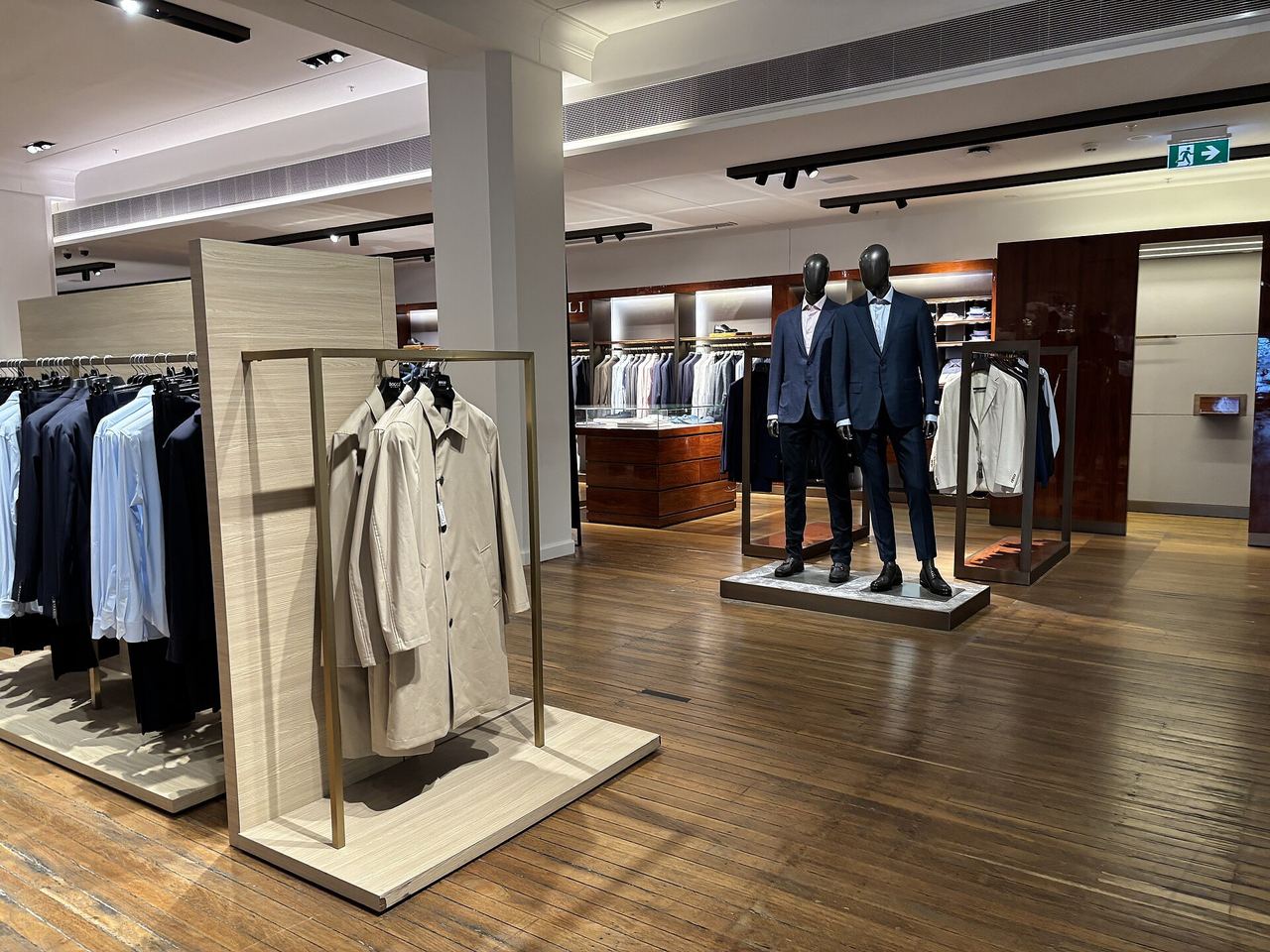
Photo Credit
Image courtesy of © Nick-D · CC BY-SA 4.0 via Wikimedia CommonsOn Saturdays the city shops outdoors. Paddington Markets, at 395 Oxford Street, have opened since 1973; they began as a market to encourage local fashion designers, craftspeople and artists, and call themselves Sydney’s oldest continuous weekly community and artisan markets, with more than 150 stalls.
Glebe Markets, at 46–56 Glebe Point Road, mix vintage clothing, local designers, handmade jewellery and live music, and the Carriageworks Farmers Market, in the old Eveleigh railway workshops, trades the same morning. A city that sells its oldest buildings as shopping centres also sells its newest designers from a trestle table.
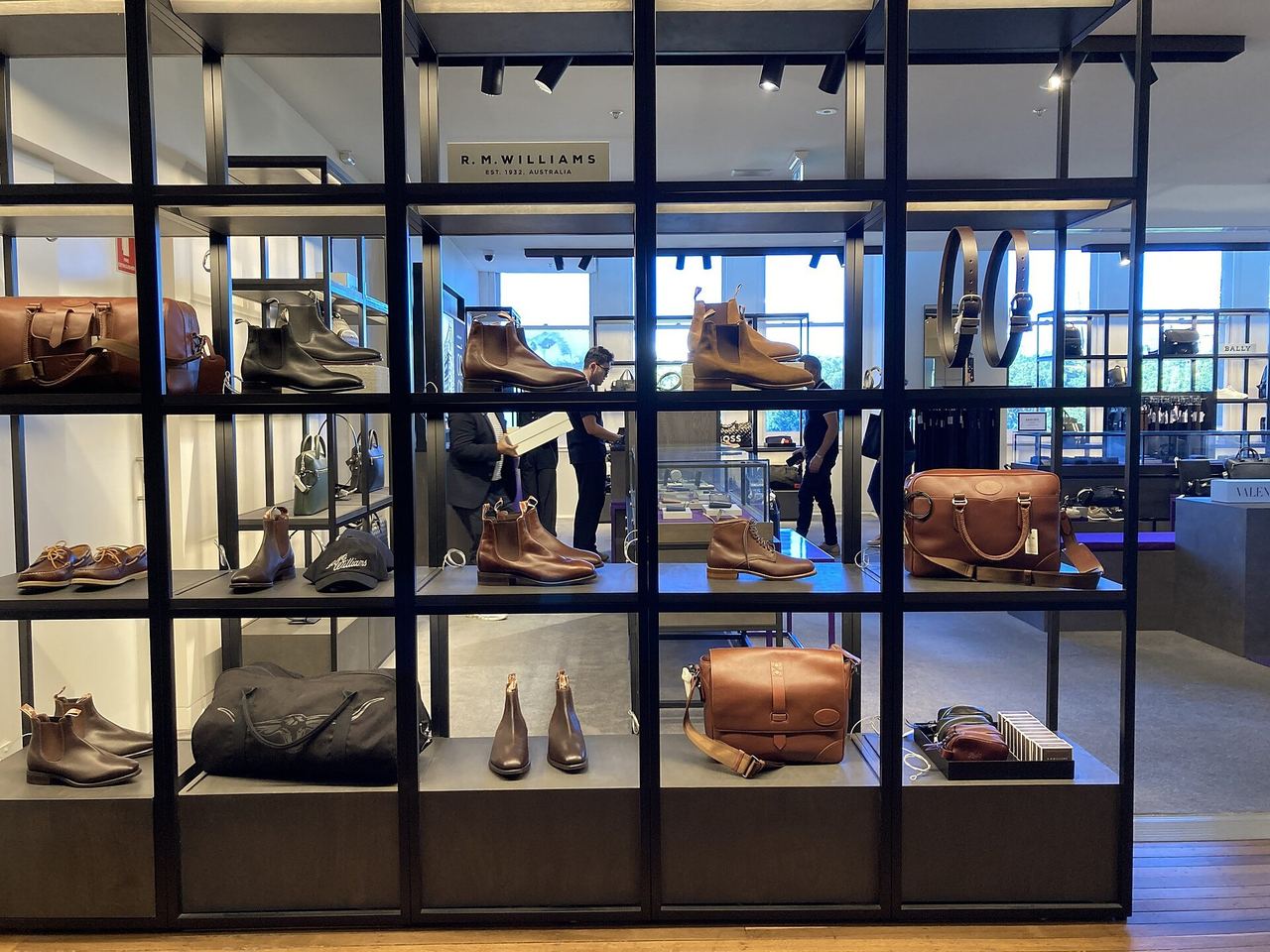
Photo Credit
Image courtesy of © Nick-D · CC BY-SA 4.0 via Wikimedia CommonsOur advice: walk the QVB and the Strand Arcade on a weekday morning, then cross to David Jones; keep Saturday for Paddington Markets, open 10am–4pm, and Glebe. Try R.M.Williams boots with the socks you mean to wear them with, and walk the length of the shop before you decide.
Why it's on our list
- A market hall named for a queen
- Fire in the arcade
- The store on George Street
- Made here: boots, hats and resin
Location
The map comes from Google Maps, which sets its own cookies once it loads.
More in depth
 The back storyBuying in Sydney: the harbour, the east and the rules for foreign buyersWhat foreign buyers must know before they look.
 Opened 7 Nov 2026Powerhouse ParramattaOpen since 7 November 2026: NSW’s largest museum, with five shows on the Parramatta riverfront.
 The back storyGetting around Sydney: trains, metro, ferries and OpalMetro, trains, light rail and ferries on Opal or a card.